Friday, May 18, 2012

Lavender Earl Grey Scones


Here's another scone recipe from the famed sconery (no that's not a real word) in NYC, Alice's Tea Cup. A few months back I promised to share another of their delicious recipes (especially for those far from the east coast). So here it is folks: lavender earl grey scones. I've actually never tried this particular variety in the restaurant before, so I was eager to make them. I thought they'd make a lovely addition to a springtime brunch, and of course, earl grey tea. 


I find many people are wary of using lavender in their cooking, for fear that it will taste like soap or their beloved grandmother's perfume. While we all love soap and perfume, they don't necessarily belong in food. Lavender is an extremely strong herb and a little goes a long way. When used in the appropriate proportions however, it adds a wonderfully light and floral quality to whatever you include it in. 


These scones give you just a hint of lavender combined with subtle undertones of earl grey tea. They seem a bit classy even though they're quick and easy to make (making them perfect for a breakfast or brunch party). They're delicate and just down right good with a proper cup of tea. 


LAVENDER EARL GREY SCONES
Recipe courtesy Haley & Lauren Fox, Alice's Tea Cup Cookbook

Ingredients:
2 heaping tsp. Lavender Earl Grey tea leaves (see notes below)
3 cups all-purpose flour
1/3 cup sugar
½ tsp. baking soda
2½ tsp. baking powder 
¾ tsp. kosher salt
1½ sticks (3/4 cup) unsalted butter, cut into ½-inch pieces
1¼ cups buttermilk, shaken
½ tsp. vanilla extract
¼ cup heavy cream (for brushing)
¼ cup sugar (for sprinkling)

Preheat the oven to 425 degrees F. Line a sheet pan with a piece of parchment paper and set aside. 

Begin by steeping 1 heaping tsp. of the Lavender Earl Grey tea leaves in ¼ cup boiling water for 3 to 5 minutes. Strain and reserve the tea.

In a well-cleaned coffee or spice grinder, grind the remaining teaspoon of tea leaves to a very fine powder. In a large mixing bowl, combine the powdered tea leaves, flour, sugar, baking soda, baking powder, and salt. Whisk to combine.

With clean hands, or using a pastry cutter, work the butter into the dry mixture until it is fully incorporated and has the consistency of fine breadcrumbs.

Next, make a well in the center of the dry ingredients and pour in the buttermilk, vanilla extract, and 1 tbsp. of the brewed Lavender Earl Grey tea. Using your hands, combine the ingredients until the dry mixture is wet (do not knead!). 

Turn the mixture onto a clean, lightly floured surface, and using your hands, gather the dough together. Gently pat the dough to create a rectangle about 1½ inches thick. Using a dough cutter or large knife, cut the scones into wedges measuring about 3½ by 4 inches, and carefully place them on the prepared pan.

Liberally brush the tops of each scone with heavy cream and sprinkle with sugar. Bake the scones for 12 to 15 minutes, or until lightly browned. 

Yield: 8 to 10 scones 

Notes:
  • You can find Lavender Earl Grey tea at specialty tea shops or online.

Monday, May 14, 2012

Spring Risotto


What better way to celebrate spring than with a medley of artichokes, asparagus, and peas?  Risotto is one of my favorite things to cook because it's extremely versatile and lends itself to an array of ingredients. No matter the season, there's nothing you can't add to risotto even leftover meats and vegetables. 


I've been making a variation of this spring inspired risotto for a number of years. This time, I've added artichokes. I've been a little obsessed with artichokes after roasting them with garlic and dipping them in a heavenly aioli earlier this week. Artichokes take a bit more effort to prepare compared to your average vegetable, but they're definitely worth it; you can never go wrong with creamy rice and delicate pieces of chopped artichoke hearts. To me, this dish is a splendid harbinger of spring, an anticipatory taste of summer's bounty.


Often times people are turned off by cooking risotto because they feel they have to be glued to the pot. It's true, making risotto takes some love and care from the cook, but I actually enjoy stirring the pot, sipping a glass of wine, and leaving my mind free to wander. It's an alternative form of meditation, and one that leaves you with a delicious dinner. 


SPRING RISOTTO
Ingredients:
2 tbsp. olive oil
1 tbsp. unsalted butter
2 cloves garlic, minced
1 large yellow onion
1½ cups arborio, carnaroli, or baldo rice
¾ cups white wine
4 to 5 cups chicken or vegetable stock
2 globe artichokes
1 lb. asparagus
1 cup fresh green or frozen peas
Zest from 1 lemon
Juice from half a lemon
1 lemon, for preparing the artichoke
1 cup Parmesan 
Handful of Italian parsley, chopped

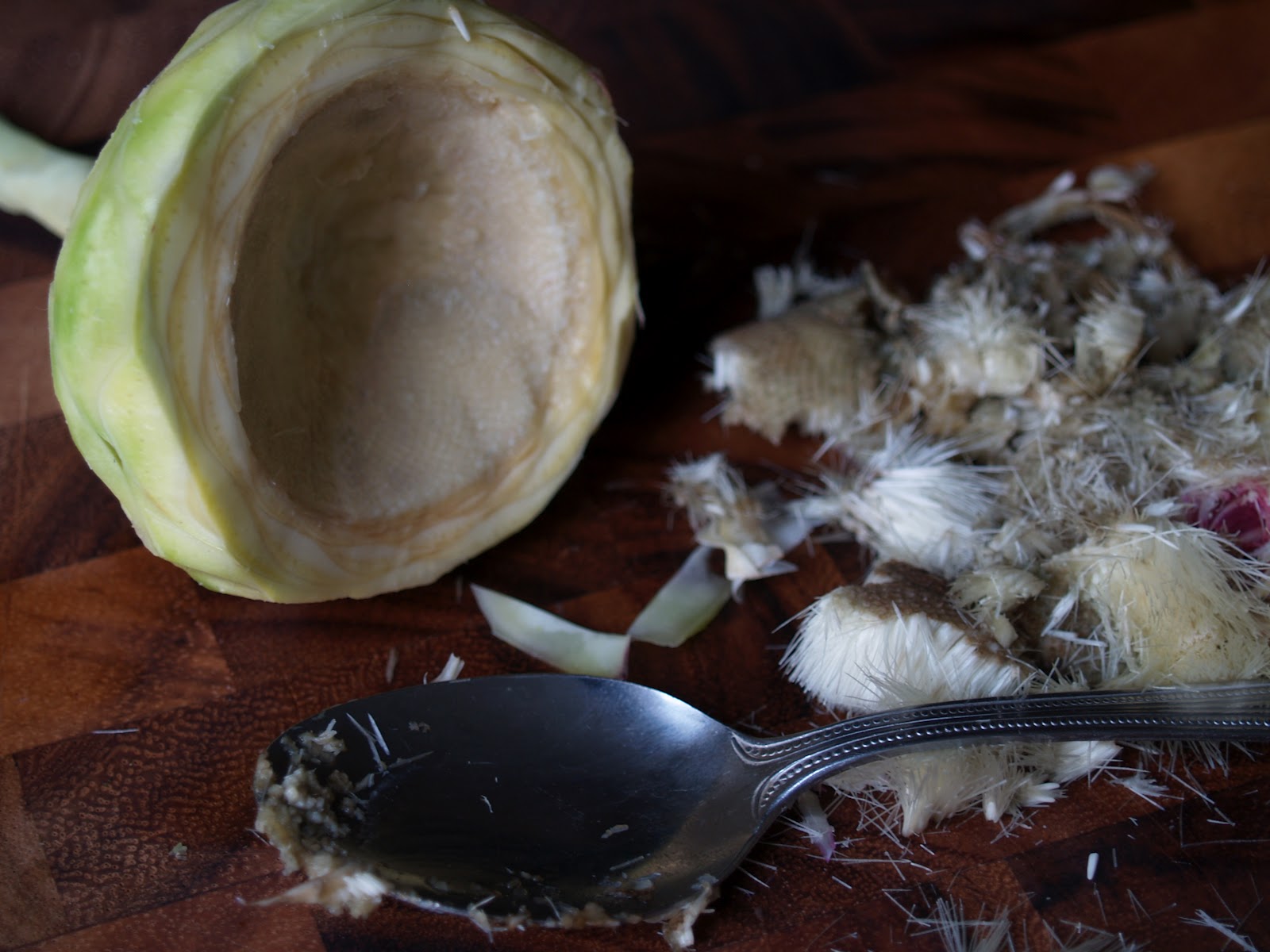
To prepare the artichokes, start by bringing a large pot of salted water to a boil. Using a serrated knife, cut the top 2/3 off of each artichoke and discard. With a paring knife, cut off the green outer leaves until you reach the light areas of the artichoke. Pull off the purple colored leaves and discard. With a small spoon, scoop out the choke being careful not to dig into the heart. Using the same knife or a vegetable peeler, remove all of the green off the stem. Rub the artichokes with lemon juice to prevent browning and place in a small bowl filled with water, with half a lemon in it, until ready to use. Place the artichokes and lemon in boiling water and cook for 7 to 10 minutes, until a paring knife slides easily in and out of the heart. Remove the artichokes and lemon with a spider and place in a bowl of ice water to stop cooking. Discard lemon. Once cool, chop artichokes into large cubes. 

In the same boiling water, blanch the asparagus for 2 to 3 minutes, just until tender. Immediately transfer the asparagus to a bowl of ice water to stop them from cooking. Once cool, chop the asparagus on the bias into 1½-inch pieces. 

Meanwhile, begin the risotto. In a 2-quart pot, bring the stock just to a boil. Turn off heat and cover to keep warm. In a large Dutch oven or other heavy duty pot, heat the olive oil and butter over medium heat. Add the onion and sauté until translucent, about 5 to 7 minutes. Add the garlic, and stir, cooking for 1 minute more. Add the rice and stir to coat with the vegetables, oil, and butter. Pour in the white wine and let simmer until most of the wine has cooked down and been absorbed by the rice. Begin adding the stock two ladles at a time. Allow the liquid to be almost completely absorbed before adding more. Continue adding the stock a ladle at a time, allowing it to absorb, until the rice is done, about 25 to 30 minutes.

When the rice is 10 minutes from being done, add the artichokes, asparagus, peas, lemon zest, 2 tsp. salt and pepper to taste. Stir to combine and continue cooking and adding the stock, stirring almost constantly, until the rice is tender, but firm. Once done, turn off the heat, and stir in the lemon juice, Parmesan cheese, and chopped parsley. Taste to adjust seasonings. Garnish with more cheese and drizzle with olive oil, if desired, and serve immediately. 

Notes:

  • If you're intimidated by the artichokes, watch chef instructor John Riley from the CIA demonstrate how easy it is to prepare them here.

Thursday, May 10, 2012

Roasted Chicken: Brined Two Ways


There are so many ways to prepare a roast chicken, but no matter which method a cook chooses, they all want the same outcome: moist flavorful meat with a beautifully browned crisp skin. I hesitated writing this post, as I'm well aware the world doesn't need another recipe for roasting a chicken on the internet. But I reminded myself that this blog was intended to catalog my recipes, and in the process, share them with you. So I say, to hell with it! Perhaps there's someone out there whose never brined and/or roasted a chicken, and here they'll find two equally delicious methods to choose from, along with the basics for roasting the perfect bird. 


I find myself preparing a chicken for roasting one of two ways: 1)Dry brining it with an herbed-salt mixture 2)Wet brining it in a seasoned liquid brine. These methods require a bit more planning, as the wet brine needs about 8 to 12 hours or overnight, and the dry brine takes 1 to 2 days. I feel each gives wonderful results, and I vary the method depending on how much time I have. When I'm short on time or when I spontaneously feel like roasting a chicken, I will skip the brining process all together and proceed with the recipe I've provided on roasting at the bottom of this post. 


For years I was skeptical of brining. I thought the salt solution would create an overly salty bird and mask its delicate natural flavor. Through experimentation, I've proved myself wrong. I now find that if you have the time, brining takes your bird the extra mile. 


What is a brine? A brine is a salt and water solution, and in the case of chicken, helps to add moisture and flavor to the meat. Aki Kamozawa and H. Alexander Talbot in Ideas in Food, explain the process of brining beautifully, and I will do my best to paraphrase. A brine works through the process of osmosis. While the chicken is soaking in the brine, the salt solution is drawn in through the cell walls of the bird, from an area of higher concentration to an area of lower concentration. In the areas where there are higher concentrations of salt, it will draw enough water into that area until equilibrium has been reached. First, the water will be drawn out of the chicken and into the brine (since the brine has a higher concentration of salt than the meat of the bird). Then, by process of diffusion, the salt and water are drawn back into the chicken. Once the salt is absorbed into the chicken, it begins to breakdown the proteins in the meat. The chicken is then able to absorb more brine and swelling occurs. The broken down or denatured proteins hold the brine in a water-holding matrix, creating a bird that is juicier, flavorful, and more tender.


Science aside, I love a roasted chicken because in my opinion, there are few things more comforting on earth. It can be a simple family meal or an elegant one, depending on your approach. These recipes will lead to a beautifully moist chicken with an almost pastry-like flaky, buttery, crunchy skin. What are you waiting for? This ain't your typical spring chicken.


LEMON ROSEMARY BRINED CHICKEN (WET BRINE)
Slightly adapted from Kristina Johnson's blog, The Former Chef 

1 5-6 lb. chicken 
1 gallon (16 cups) cold water
6 oz. (by weight) kosher salt (about 1 cup)
1 oz. (by weight) brown sugar (light or dark- about 2 tbsp. packed)
3 lemons, halved
2-3 sprigs fresh rosemary
1 bay leaf
1 tsp. black peppercorns, crushed
2 tsp. juniper berries, crushed (optional)
4 cloves garlic, peeled and smashed

In a small saucepan, combine the salt, brown sugar, and 2 cups of the water and heat until the salt and sugar are dissolved. Set aside and allow to cool for about 10 minutes.

Meanwhile, prep the chicken. Remove the neck and giblets (if included) from the main cavity and reserve for another use (or discard). Rinse the chicken thoroughly inside and out with cold water and place in a large pot (about 12 qt. size). Squeeze the halved lemons over the bird and drop them in the pot. Add the smashed garlic, rosemary, and spices. Pour the remaining 14 cups of cold water into the pot, followed by the slightly cooled salt/sugar solution. If the water doesn't completely cover the chicken, add a couple more cups so that it is fully submerged (you can always place a plate on top of the chicken if it begins to float). Cover and refrigerate for 8 to 12 hours. Thoroughly rinse the chicken in cold water to remove the brine. Pat completely dry with paper towels and if you have time, let the chicken sit uncovered in the refrigerator for an hour to dry out the skin. Remove from the fridge and let the chicken come to room temperature before roasting.


LEMON & HERB SALTED CHICKEN (DRY BRINE)

Ingredients:
1 5-6 lb. chicken
1 tsp. kosher salt per pound of chicken
1/4 tsp. freshly ground black pepper
1/2 tsp. fresh rosemary, minced
1/2 tsp. fresh thyme, minced
1/2 tsp. fresh sage, minced
1 clove garlic, peeled and minced
1 tsp. grated lemon zest

In a small bowl, add the salt, herbs, garlic, and lemon zest. Mix well to combine. Rub the salt and herb mixture into the chicken, seeing that it is evenly coated. Place the chicken in a roasting pan or on a large dish and cover with plastic wrap. Allow it to sit in the refrigerator for 1 to 3 days before roasting. 

Remove the chicken from the fridge and thoroughly rinse it in cold water to remove the brine. Pat completely dry with paper towels and if you have time, let the chicken sit uncovered in the refrigerator for an hour to dry out the skin. Remove from the fridge and let the chicken come to room temperature before roasting.


ROASTED CHICKEN 
(Whether brining or not, this is my standard recipe for roast chicken)

Ingredients:
1 5-6 lb. chicken, brought to room temperature
6 to 8 tbsp. unsalted butter, room temperature (you can also use an herb butter- see recipe below)
1 lemon, quartered
1 head garlic, halved
A handful of mixed herbs (such as rosemary, thyme, and sage)- for stuffing the bird and extra for seasoning the vegetables (if using)
Salt and freshly ground pepper
Copped vegetables (optional)- I like to use 2-3 carrots, 2-3 parsnips, and a handful of small potatoes
1 cup chicken stock or water
Butcher's twine for trussing

If using an herb butter:
6 to 8 tbsp. unsalted butter, room temperature
1/2 tsp. fresh rosemary leaves, minced
1/2 tsp. fresh thyme leaves, minced
1/2 tsp. fresh sage leaves, minced

Allow your chicken to come to room temperature (takes about 1 to 1½ hours). Position oven rack in the center of the oven and place your roasting pan in the oven. Pre-heat oven to 425 degrees F. 

Using a small knife, remove the wishbone (located between the breast and neck) from the chicken by scraping around the bone with a small knife, and pulling it out using your fingers (this will allow you to carve with ease later on).  Salt and pepper inside the neck and main cavities. Place the halved garlic and quartered lemon in the main cavity, along with a handful of fresh herbs (such as rosemary, thyme, or sage or a combination of all three). Fold the wing tips under the bird.

Using your fingers, slowly nudge the membrane between the skin and breast to make room for the butter (be careful not to tear the skin). Using your hands, evenly rub 3 or 4 tbsp. of the softened butter under the skin. Truss the chicken or simply tie the legs together (see notes below). Place the chicken on a v-rack and rub the remaining butter over the entire outer skin of the chicken. Salt and pepper the bird.  

Remove the preheated roasting pan from the oven and position the v-rack holding the chicken in the pan. If using chopped vegetables, scatter them around the rack and include some herbs if desired, (no need to chop the herbs, just toss them in). Pour 1 cup chicken stock or water into the bottom of the pan. 

Position the chicken with the breast-side facing the oven door (legs facing the back of the oven) and roast for about 1 ½ to 1¾ hours (add more stock or water to the pan if it becomes too dry, and tent the chicken loosely with foil if browning too quickly). Continue to roast until a thermometer inserted into the thickest part of the thigh or breast (being careful not to hit bone) reads 165 to 170 degrees F (it’s a good idea to check both thighs, as they can vary in temp), or when the juices between the leg and the breast run clear, and the legs wiggle in their sockets. Start checking the temperature about 15 to 20 minutes prior to when you think it should be done. Once done, transfer the chicken to a cutting board and tent very loosely with foil. Let rest 10 to 20 minutes before carving. I like to remove the entire breast in one piece and cut it against the grain into large pieces.  

Notes:
  • I've found over the years that one of the most important steps in roasting a chicken is allowing it to come to room temperature before cooking. I cannot stress the importance of this enough. If you place a cold chicken in a hot oven, it will decrease the oven's temperature and potentially lead to an unevenly cooked bird or result in a longer cooking time. Additionally, this step will dry out the skin and help create an incredibly crisp skin after roasting. 
  • There are many ways to truss a chicken, but the simplest way is to tie the legs together using butcher's twine. If you want to get fancy, you can watch chef Thomas Keller demonstrate how to truss a chicken in this video.
  • If you don't have a v-rack or a roasting pan, simply place your chicken in a large ovenproof pan, such as a cast iron skillet, and roast as directed. If using vegetables, place them directly in the pan and position the chicken on top of them.
  • I do not baste my bird, I find it unnecessary. Besides constantly opening the oven door to baste, lets out far too much heat, and lowers the overall oven temperature.
  • Another method for roasting a chicken is to cook it on its side for 20 minutes (leg facing the top of the oven), flip it and roast it on its other side for 20 minutes, and finish it breast-side up for the final 30 minutes, or until finished cooking. If using this method, work quickly, as you don't want to let out too much heat from the oven.


Sunday, May 6, 2012

Garlic Roasted Artichokes with Lemon Aioli


Growing up in California, I've had my fair share of artichokes. If you take a moment to think about them, they're such a strange vegetable. Every time I eat one, I can't help but wonder how anyone discovered they're edible. Nevertheless, I'm glad they did! In the U.S., artichokes are primarily grown in California and peak in the spring and again in the fall. Look for artichokes that have tightly closed leaves and are evenly green with little or no brown discoloration. They should also feel slightly heavy for their size.  I don't eat them too often on the east coast, as they can cost a pretty penny. Or maybe I'm just used to the roadside stands in Castroville, off the coast of Monterey Bay, that sell 10 for a dollar, or something outrageously wonderful as that. 


As a child, my parents always used to boil them, which is certainly a quick and delicious way to prepare them. This year however, I came across several recipes for roasting them, and came up with my own. Roasting artichokes is a more rustic approach that makes them incredibly flavorful and beautifully browned. In Sicily, they are often cooked directly in open pits of hot embers. In my apartment, roasting is the next best thing. The garlic and oil infuse the artichoke with so much flavor, while the red peppers add a good bit of heat. 


These artichokes are of course amazing to eat all on their own, but if you like a condiment for dipping (aside from mayonnaise) I find this lemon aioli is a fine companion. Frankly, it's kind of like crack. I couldn't stop dipping my artichokes! The aioli takes a few minutes of constant whisking, but by god is it worth it (think of it as a rewarding arm workout). It can also be made in a blender, which is great news for the time-sensitive (or lazy) cook. 


GARLIC ROASTED ARTICHOKES

Ingredients:
5 to 6 cloves garlic, minced 
½ tsp. red pepper flakes
2 tsp. dried oregano
¾ cup olive oil
4 globe artichokes
Balsamic vinegar, for drizzling
Sea salt and freshly ground black pepper
Lemon

Preheat oven to 425 degrees F. In a small bowl or measuring cup, combine the garlic, red pepper flakes, oregano, and olive oil. Mix well and set aside.

To prepare the artichokes, cut off their stems and rub the bottoms of each with lemon juice to prevent browning. Using a serrated knife, cut about 1½ inches off the top of each artichoke and discard. Using scissors or kitchen shears, cut off the top half of the remaining leaves (the prickly part). Rub the artichokes with lemon juice. 

Tear off 4 sheets of aluminum foil per artichoke (large enough to wrap around the entire artichoke). Place an artichoke in the center of each piece and spoon the garlic and herb mixture over each. Work the mixture in between the leaves using your fingers or a small spoon. Pour the oil evenly over the 4 artichokes. Drizzle each with balsamic vinegar and season with sea salt and freshly ground pepper. Wrap the foil around the artichokes (I like to double wrap mine to prevent leaking). Place the wrapped artichokes in an ovenproof baking dish and roast for 1¼ hours. 

Yield: 4 roasted artichokes 

Notes:
  • The artichokes are roasted with their choke intact. Once you've peeled away most of the outer leaves, you'll see small purple leaves in the center of the artichoke. Pull these out and using a spoon, scrape out the rest of the choke and discard, being careful not to dig into the heart. Then you can continue eating your artichoke heart with ease!

LEMON AIOLI 
Adapted from Saveur magazine

Ingredients:
1 clove garlic, smashed
¼ tsp. kosher salt
2 egg yolks
2 tsp. Dijon mustard
½ tsp. lemon zest, minced
2½ tsp. lemon juice
2/3 to 1 cup olive oil
Salt and freshly ground black pepper

Using a mortar and pestle, mash the salt and garlic together to form a paste. Place in a medium sized bowl and add the egg yolks, mustard, lemon zest, and juice. Whisk until smooth. While whisking constantly, add the olive oil a few drops at a time (I like to transfer the oil to a squeeze bottle for ease in pouring). Allow the oil to become fully incorporated before adding more, a little at a time. As the aioli begins to thicken, add the oil in a very slow and steady stream, still whisking constantly (if the mixture begins to separate, stop adding the oil and drizzle with a few drops of lukewarm water. While whisking, continue adding water a little at a time until the mixture comes back together. Then continue adding the oil). The end result should be thick, smooth, and creamy. Season with salt and pepper to taste. 

Blender method:
Place the all of the ingredients, except for the oil, in a blender and puree until smooth. With the blender running on low speed, slowly add some of the olive oil a little at a time. As the mixture begins to thicken, gradually pour the oil into the blender in a slow and steady stream, until a smooth and creamy consistency is reached (if the mixture begins to separate, stop adding the oil and drizzle with a few drops of lukewarm water. While the blender is running on low speed, continue adding water a little at a time until the mixture comes back together. Then continue adding the oil).

Thursday, May 3, 2012

Cookies & Cream Ice Cream


Aaron specially requested this ice cream as one of his edible birthday presents this year. This is one of his favorite ice creams that I make and little does he know how easy it is to make! This particular recipe is a Philadelphia style ice cream, which unlike French style ice creams, does not contain eggs. That means it's incredibly easy and less work to make. You don't have to separate eggs, temper, or cook the base to create a custard (good news for the lazy cook). Though it's not as rich as some egg-based ice creams, it's still sinfully delicious, and surprisingly light and refreshing. 


Unfortunately, I have no idea where I found the original recipe. By now, it has been adapted and over the years morphed into something all my own. All I know is that after the first time I made this ice cream, I immediately wrote down my version of the recipe so I wouldn't forget it. That's always a good sign. 


This tastes the way cookies and cream ice cream is supposed to taste. There are no fillers or additives commonly found in store-bought ice creams. It's a simple recipe made with simple ingredients. Since there are no eggs, the flavor of the cream stands out beautifully. Sometimes I just crave that unadulterated creaminess and this hits the spot. I wouldn't be surprised if I get another request for this in just a few days. 


This ice cream marks the beginning of my year-long ice cream challenge (Aaron's idea, no big surprise). My challenge is to make two ice creams (including sorbets and gelatos etc.) a month, 24 in a year. I realize many people don't have an ice cream maker, but this is a personal challenge I've set for myself just for fun. I figured some of you would like to follow along, ice cream maker or not. We love having frozen desserts in the house and this is a great way to ensure a constant supply!


COOKIES & CREAM ICE CREAM

Ingredients:
1½ cups whole milk
1 cup sugar
¼ tsp. sea salt
2½ cups heavy cream
1½ tsp. vanilla extract
3 cups chocolate cream-filled cookies (2 cups chopped & 1 cup broken into large pieces)

In a 2-quart saucepan, add the milk, sugar, and salt. Heat over medium heat, whisking every so often, until the milk begins to simmer and the sugar has completely dissolved (approximately 175 degrees F). Remove from heat and let cool for a few minutes. 

Once cooled slightly, add the cream and vanilla extract and whisk to combine. Transfer the cream mixture to a medium-sized mixing bowl and cover with plastic wrap. Refrigerate for 4 hours or overnight. 

Transfer the cream mixture to an ice cream maker and process according to the manufacturer's instructions. Transfer the ice cream to a large metal bowl. Using a rubber spatula fold all of the cookie pieces into the ice cream. Scoop the ice cream into plastic containers and freeze for several hours or over night.

Makes about 1¾ quarts 

Notes:
  • If you're adverse to eating the Nabisco brand Oreo's, look around and you can find many different varieties that taste equal to or better than Oreo's themselves. I like to use Whole Food's 365 brand or Late July brand cookies. Also, refrigerating the cookies makes them easier to chop.