Sunday, January 15, 2012

Baked Lasagna


Last month, Aaron's parents were in town to celebrate an early Christmas. We invited them over to our place for dinner, and realized that in all the years we've been together, they'd never tried any of my cooking. After tossing around a few ideas, trying to find a dish everyone would enjoy, we finally landed on a simple hearty dish that's sure to please: lasagna.


Everyone has their own version of lasagna and mine comes from Sylvia Sebastiani's cookbook, Mangiamo, Let's Eat! I've been making this recipe for years, and for me, it has become the definitive way to cook it. I like Sylvia's unexpected choice of Swiss cheese in this dish. I find it's a great combination with the other cheeses. I of course follow suit with her wonderful spaghetti sauce, of which you can find here.


BAKED LASAGNA

Slightly adapted from Sylvia Sebastiani, Mangiamo, Let's Eat!

Ingredients:
1 16 oz. package lasagna noodles
1 lb. good quality fresh ricotta cheese
1/2 lb. buffalo mozzarella cheese, grated
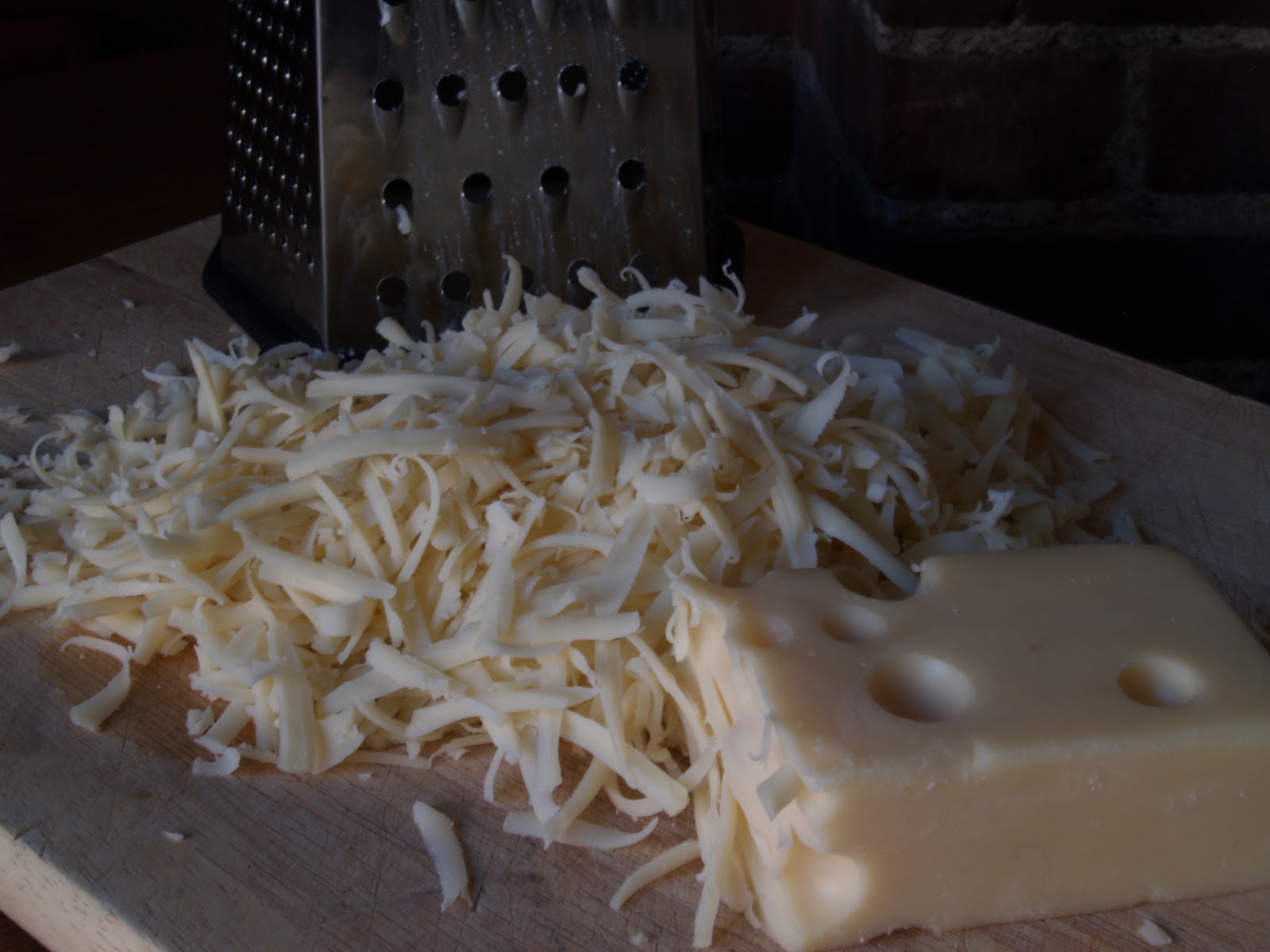
1/2 lb. Swiss cheese, grated
1/2 cup parmigiano reggiano cheese, finely grated
About 2 quarts good quality spaghetti sauce, preferably homemade (see here)
Salt and pepper to taste

Preheat oven to 350 degrees F. Cook lasagna noodles in boiling, salted water (with a splash of olive oil to prevent sticking), according to the label directions. Once done, drain immediately and submerge noodles in a large bowl of ice water to stop cooking. 

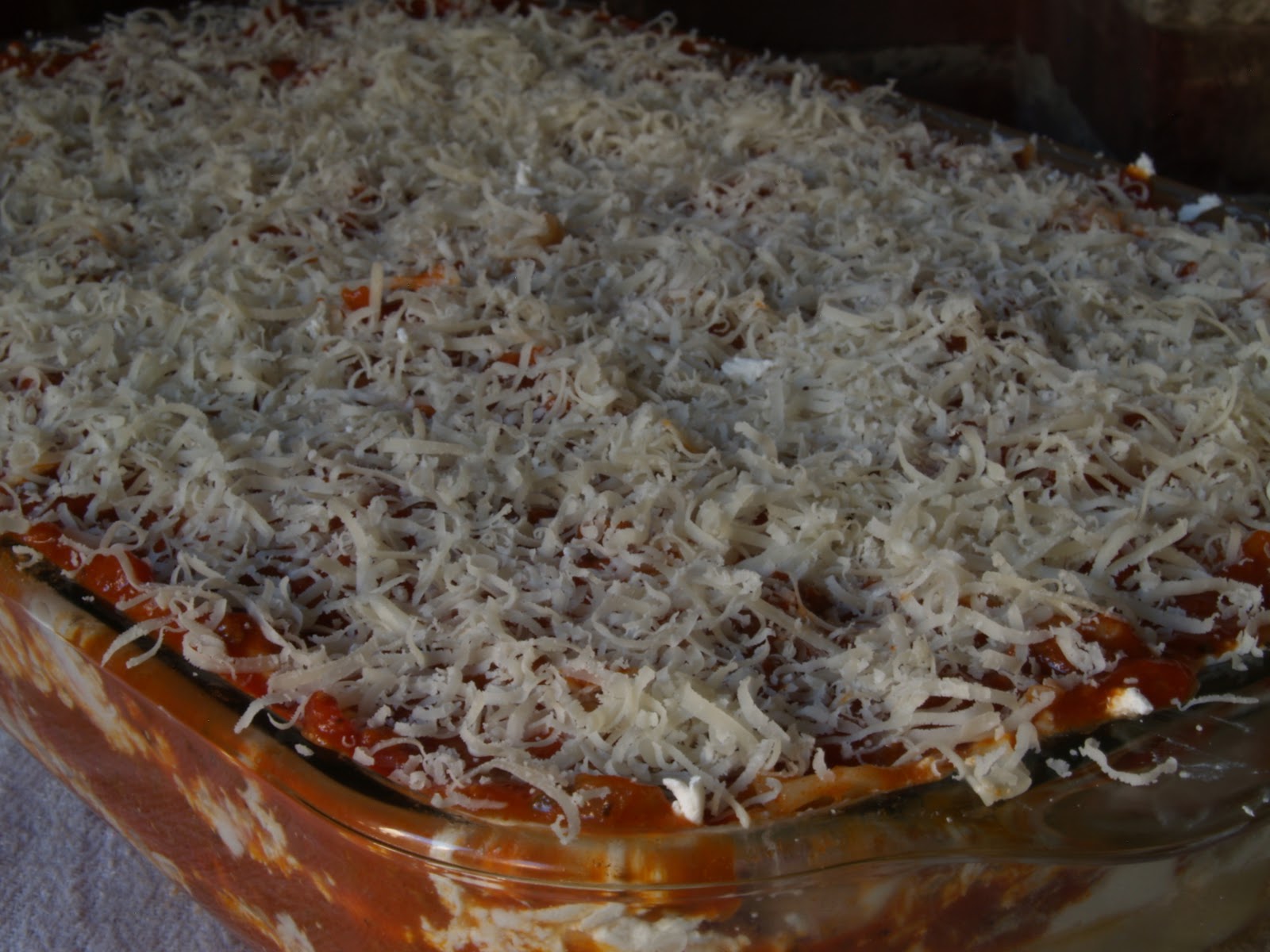
Butter a 9 by 13 inch casserole dish and begin by arranging a layer of lasagna. Evenly spread a thin layer of ricotta over this, followed by a layer of spaghetti sauce, a layer of mozzarella, and finishing with a sprinkling of Swiss cheese (careful not to add too much Swiss, or it can overwhelm the dish). Repeat layers in this order until all ingredients are used, ending with a layer of lasagna covered with sauce and topped with a generous sprinkling of Parmesan. 

Bake for 50 minutes to 1 hour or until sauce is bubbling. Remove from oven and let stand for 15 minutes for ease in cutting. 

Yield: 8 to 10 servings

Friday, January 13, 2012

Buttermilk Scones


This recipe comes from the well-known New York City tea and scone hot spot, Alice's Tea Cup. The first time I tried their "Mad Hatter" (a tower of scones, tea sandwiches, cookies and treats) I thought I'd died and gone to heaven. They have some of the best scones I've ever tasted. I always wished I could snatch up a few of Alice's recipes. On a whim, I searched the catalogues at my local library and low and behold they have their very own cookbook that just came out! I put it on hold and it finally came in last week.


You can be sure I'll be sharing more of these delicious recipes with you over the coming months, but I thought I'd start by posting their classic savory buttermilk scones. I know the restaurant is just a few blocks away and I could pick up some scones anytime I please, but there's nothing like making them in your own home. Besides, you never know where you'll be when you get a sudden craving for these magnificent treats. It's nice to have the recipes on hand to make them no matter where you may be!


These scones also christened our new oven. Our super came to replace our old one just as I was measuring the flour. It was perfect timing, and I tossed my scones into the new oven only a few minutes after it was hooked up. It was a success! I finally have an oven that cooks at the correct temperature (unlike the old one which was 50 to 75 degrees off on any given day) and has numbers on the oven dial. R.I.P. old oven, you will not be missed.


BUTTERMILK SCONES
Courtesy: Haley & Lauren Fox, Alice's Tea Cup Cookbook

Ingredients:
3 cups all-purpose flour
1/2 tsp. baking soda
2½ tsp. baking powder
¾ tsp. kosher salt 
1½ sticks (¾ cup) unsalted butter, melted
¾ cup buttermilk

Preheat oven to 425 degrees F. In a large mixing bowl, combine the flour, baking soda, baking powder, and salt. Make a well in the center of the dry ingredients and pour butter and buttermilk into the well. With clean hands, combine the ingredients just until the dry mixture is wet, but do not knead!

Turn the mixture onto a lightly floured surface and gather the dough together. Gently pat the dough to make a disk about 1½-inches thick. Using a 3-inch biscuit cutter, cut out as many scones as you can and lay them on a parchment lined baking sheet. Gather the remaining dough together lightly to cut out more scones- just don't knead the dough too much. 

Bake the scones for about 12 to 15 minutes, or until lightly browned. Serve warm with butter and honey.

Yield: about 6 scones

Monday, January 9, 2012

Creamy Cauliflower Soup


Last winter while I was home visiting my family, I rummaged through my parents pantry to see what cookbooks they had and which ones they wouldn't mind me swiping. Tucked away on a shelf next to the candles and light bulbs in the pantry, I'm always sure to find old food-stained recipe cards collected from friends and family over the years. I was surprised to find a book in the mix that contained Santé restaurant's recipe for cauliflower soup. Santé is located within the distinctly pink walls of the Sonoma Mission Inn & Spa, in Sonoma, CA and has received a Michelin Star, the only restaurant in Sonoma Valley to receive this honor.


As expected, I was more than happy to come across one of their recipes. I've never had the privilege of eating at Santé, so this soup was the next best thing. Since this east coast weather has been all over the place (14 degrees one day and 60 degrees the next) my body can't figure out what's happening. I thought this soup would be just the thing to get me back on track. I remembered this recipe this morning and dug it out of my stack of unused recipes waiting to be cooked.


I was pleased to see a large pile of cauliflower at the farmer's market, so it was meant to be. This soup showcases this often neglected vegetable and is smooth and creamy with a delicate hint of fresh thyme. This recipe makes a good amount of soup, so you could certainly cut it in half. Or freeze leftovers for later use.


CREAMY CAULIFLOWER SOUP:
Slightly adapted from Santé restaurant, Sonoma, CA 

Ingredients:
4 heads fresh cauliflower (about 3½ lbs.), chopped
1 yellow onion, chopped
2 cloves garlic, peeled and chopped
7 oz. unsalted butter (14 tbsp.)
2 quarts vegetable or chicken stock (plus 2 cups extra for thinning soup later)
2 cups heavy cream (see notes below)
1 bunch fresh thyme (about 10 sprigs)
20 whole peppercorns
2 bay leaves
Salt to taste
Cheesecloth or spice bag

In a medium stockpot over medium heat, sweat the onions and garlic in the butter until translucent. Increase heat to medium-high, add the cauliflower, and continue to cook for about 10 minutes. Add the 2 quarts of stock and cream and bring to a simmer. 

Meanwhile, prepare a cheesecloth sachet or use a spice bag and fill with the thyme, bay leaves, and peppercorns, and add to the soup. Continue to simmer for 45 minutes more or until cauliflower is completely cooked and extremely tender.

Remove herb sachet and discard. Puree the soup using a stick blender or by transferring in batches to a food processor. If the soup seems too thick, add the remaining stock a little at a time until you reach the desired consistency. Season with salt to taste and return to a simmer prior to serving. Garnish with a sprinkling of fresh thyme.

Yield: About 3 quarts

Note:
  • You can substitute the heavy cream for light cream if need be.


    Thursday, January 5, 2012

    Spaghetti Sauce


    This recipe comes from Sylvia Sebastiani's cookbook, Mangiamo, Let's Eat! Sylvia and my grandmother were lifelong friends. I consider these ladies to be part of Sonoma's old guard; they can remember it in the days when it was little more than a weekend getaway for families living in San Francisco. Over the years, they have seen it change dramatically and become an international tourist destination and one of the major wine capitals of the world. 


    Mangiamo was the first cookbook I ever owned, personally signed by Sylvia and sent off with me to college. It was a great first book to start experimenting with as it's filled with authentic old world Italian recipes. I've found some great gems throughout the book, one of them being Sylvia's spaghetti sauce. It is extremely rich in flavor and definitely worth the three hours it simmers away on the stove. This sauce can be used for a variety of dishes, but I particularly love it in lasagna and with spaghetti and meatballs. 


    I know three hours sounds like a long time, but you don't have to hover over the pot, just stir it from time to time (plus, it will trick your senses into thinking there's an Italian grandmother in your kitchen). I like to make this sauce on rainy days and let it cook while I do chores around the house or run errands. When I come back from my errands I simply give it a good stir. Doubling the recipe will give you a great quantity of sauce, which I freeze so it's always on hand. You can throw a meal together in minutes with a well stocked freezer filled with homemade sauce.  


    SYLVIA'S SPAGHETTI SAUCE:

    Slightly adapted from Sylvia Sebastiani, Mangiamo, Let's Eat!

    Ingredients:
    4 tbsp. olive oil
    4 tbsp. butter
    1 lb. ground chuck
    4 stalks celery, chopped
    4 yellow onions, chopped
    4 cloves garlic, minced
    ¼ tsp. fresh thyme, minced
    ¼ tsp. fresh rosemary, minced
    ½ cup Italian parsley, chopped
    1- 28 oz. can whole peeled tomatoes, mashed with their liquid (see notes below)
    4- 15 oz. cans tomato sauce
    About 1½ cups water (use this to rinse out your tomato cans and add to the sauce)
    1 cup dry white wine
    1 tsp. sugar
    Salt and pepper to taste

    Over medium-high heat, melt the butter and olive oil together in a 6 qt. stockpot. Add the meat and brown until just cooked through, about 5 to 7 minutes. Add celery and onions and cook until onions have browned slightly, about 8 to 10 minutes. Add the garlic and cook for 2 to 3 minutes more. Salt and pepper the meat and vegetables to taste, then add the herbs, tomato sauce, and mashed whole tomatoes. Rinse all of the cans out with water and add this liquid to the sauce (about 1½ cups water in all). Stir in the wine and sugar. Season again with salt and pepper. Bring to a boil, then reduce heat and gently simmer the sauce for 3 hours over low heat, stirring occasionally with a wooden spoon (be sure to scrape the bottom of the pot with your spoon to avoid scorching). Taste again to adjust seasonings. 

    Yield: about 3½ to 4 quarts

    Notes:
    • I prefer to use San Marzano brand canned tomatoes, but they were sold out at my local market so I used Luigi Vitelli brand instead. 
    • Let cool before placing sauce in plastic containers and freezing for later use. 
    • For a marinara sauce leave out the ground beef and begin by sautéing the vegetables in butter and oil.


      Monday, January 2, 2012

      Buche de Noel: Yule Log Cake


      I was first introduced to Buche de Noel or Yule log cake by Julia Child via PBS. Later, my uncle Jack, who is a professional baker, sold it each year at his fantastic bakery, The Basque Boulangerie Café, in Sonoma, CA. Buche de Noel is a classic cake, sometimes flour-less, which became popular at Christmastime in France around the turn of the century. Since I stayed in New York for Christmas and wasn't able to have the Basque's delicious cake, I figured I'd give it a try in my own kitchen.


      Though the finished product looks like it takes a lot of work, the cake itself is very easy to assemble. It's simply a jelly roll cake that has been frosted and rolled up. I made the cake over several days and assembled everything later. To make it easier, you could leave off the meringue mushrooms and spun sugar and the cake would still be delicious. But if you're feeling ambitious like I was, it can be a lot of fun to go all out. 


      Much of the recipe I've provided below was combined from two separate issues of Saveur magazine and were inspired by the famous Paris pastry shop, Ladurée (there is also a New York location at 864 Madison Ave.). I also payed homage to Julia Child and used her recipe for the elegant spun sugar veil. There are many varieties of this tasty log cake, but I like the one I've concocted because it is a chocolate cake or "roulade" with a mocha buttercream filling and finished off with rich chocolate ganache icing. You could certainly do a yellow jelly roll cake instead, but since Aaron and I are chocolate lovers, I had no choice. I was under the weather this Christmas, but had my heart set on this cake, so I made it for New Years instead. It was a very special way to ring in the New Year along side a bottle of bubbly. Happy New Year!


      BUCHE DE NOEL:
      Adapted from Saveur magazine, issues 39 & 143 and Julia Child, The Way to Cook

      Ingredients:

      For the meringue:
      10 tbsp. sugar
      2 large egg whites
      2 pinches cream of tartar
      Pinch of salt
      ½ tsp. vanilla extract
      ¼ cup cocoa powder
      ½ cup confectioners' sugar

      For the roulade:

      2 tbsp. softened butter
(for greasing)
      8 oz. bittersweet chocolate, finely chopped

      1 cup heavy cream

      7 egg whites
      2 tbsp. sugar


      For the mocha buttercream & rum syrup:
      1 cup, plus 2 tbsp. sugar
      4 egg whites
      24 tbsp. (3 sticks) unsalted butter, softened
      2 tbsp. strongly brewed espresso
      1 tbsp. dark rum (or 1 tbsp. strong coffee or espresso)

      For the ganache icing:

      12 oz. semisweet chocolate, chopped
      8 tbsp. (1 stick) unsalted butter, cut into small pieces

      2⁄3 cup heavy cream

      For the spun sugar veil (optional):
      1 cup granulated sugar
      3 tbsp. light corn syrup
      1/3 cup water

      For the meringue: Preheat oven to 200°. Combine sugar and ¼ cup water in a small saucepan, cover, and bring to a boil over medium-high heat, swirling pan several times until sugar has dissolved, 1–2 minutes. Uncover pan and continue to boil until syrup reaches softball stage or 236° on a candy thermometer, about 4 minutes more.

      Put egg whites in the bowl of a standing mixer fitted with a whisk and beat on medium speed until frothy, then add cream of tartar and salt. Gradually increase speed to high and beat until soft peaks form, about 30 seconds. Slowly pour in sugar syrup while continuing to beat until whites cool to room temperature and become thick and shiny, about 5 to 7 minutes. Stir in vanilla. 

      Use a rubber spatula to transfer meringue to a pastry bag fitted with a 1/4" plain pastry tip. To make meringue mushrooms, hold pastry tip perpendicular to a parchment paper-lined baking sheet and pipe meringue into the shapes of mushroom caps and stems of various sizes, then set aside for 5 minutes. Lightly moisten a fingertip in cold water and smooth out any "tails" left behind on mushroom caps. 

      Bake meringues for 1½ hours. Turn off oven and allow meringues to rest in oven until dry and crisp, about 1 hour. Bore a small, shallow hole in the center of the underside of each mushroom cap with the tip of a paring knife. "Glue" stems to caps by dipping tips of stems into ganache icing, then sticking into holes in caps. Sift a little cocoa powder on tops of caps. Meringues can be stored in an airtight container at room temperature for several days.

      For the roulade: Preheat oven to 375 degrees F. Butter a 16½" × 12" heavy baking pan and line with buttered parchment paper, cut large enough to hang over sides of the pan by about 1". Put chocolate in a large mixing bowl and set aside. Bring cream just to a boil in a saucepan over medium heat, then pour over chocolate and whisk until smooth. Set aside to cool.

      Beat egg whites in the bowl of a standing mixer fitted with a whisk on medium speed until frothy; increase speed to medium-high and gradually add sugar, beating constantly, then increase speed to high and beat until stiff, glossy peaks form, 30-40 seconds more (careful not to over beat.) Mix one-third of the whites into chocolate using a rubber spatula, then gently fold in remaining whites in two batches, taking care not to deflate batter. Spread in prepared pan and bake until a toothpick inserted in center comes out clean, 10–12 minutes. Set aside to cool in the pan.

      For the mocha buttercream and syrup: Place 1 cup sugar and egg whites in the bowl of a stand mixer and set it over a saucepan of simmering water; stir mixture until egg whites register 140 degrees F on an instant-read thermometer. Remove bowl from saucepan and place on stand mixer fitted with a whisk; beat on high speed until meringue is cooled and forms stiff peaks. Replace whisk with paddle and add butter to meringue; beat until smooth, stir in espresso, and set aside. If making in advance, cover with plastic wrap and refrigerate until ready to use. Let come to room temperature before applying to roulade. 

      To make the rum syrup, bring remaining sugar, rum (or coffee), and 1 tbsp. water to a boil in a 1-qt. saucepan over high heat; cook until sugar dissolves and set aside to cool.

      For the ganache icing: Melt chocolate and butter in the top of a double boiler set over simmering water over medium-low heat, whisking often. Remove from heat and gradually whisk in cream. Transfer to a medium bowl and set aside at room temperature, stirring occasionally, until icing thickens, about 4 hours or overnight (don't refrigerate; it makes icing hard to spread).

      For the spun sugar veil (optional): Shortly before serving, bring the sugar, corn syrup, and water to a simmer in a small saucepan. When the liquid is clear and the sugar has dissolved, increase the heat slightly and boil the sugar mixture until the caramel stage on a candy thermometer (320 to 350 degrees F).

      Set aside to cool 2 to 3 minutes, until it forms thick strands of sugar when lifted with a fork. Then, dipping the fork into the syrup, wave it over a clean broomstick or large wooden dowel (wrapped in parchment and tied to the dowel using butcher’s twine), to form long hanging threads of sugar. Lift the strands off the broomstick or dowel and gently drape around the Yule log to resemble moss (break off any large stiff globs of sugar and discard).

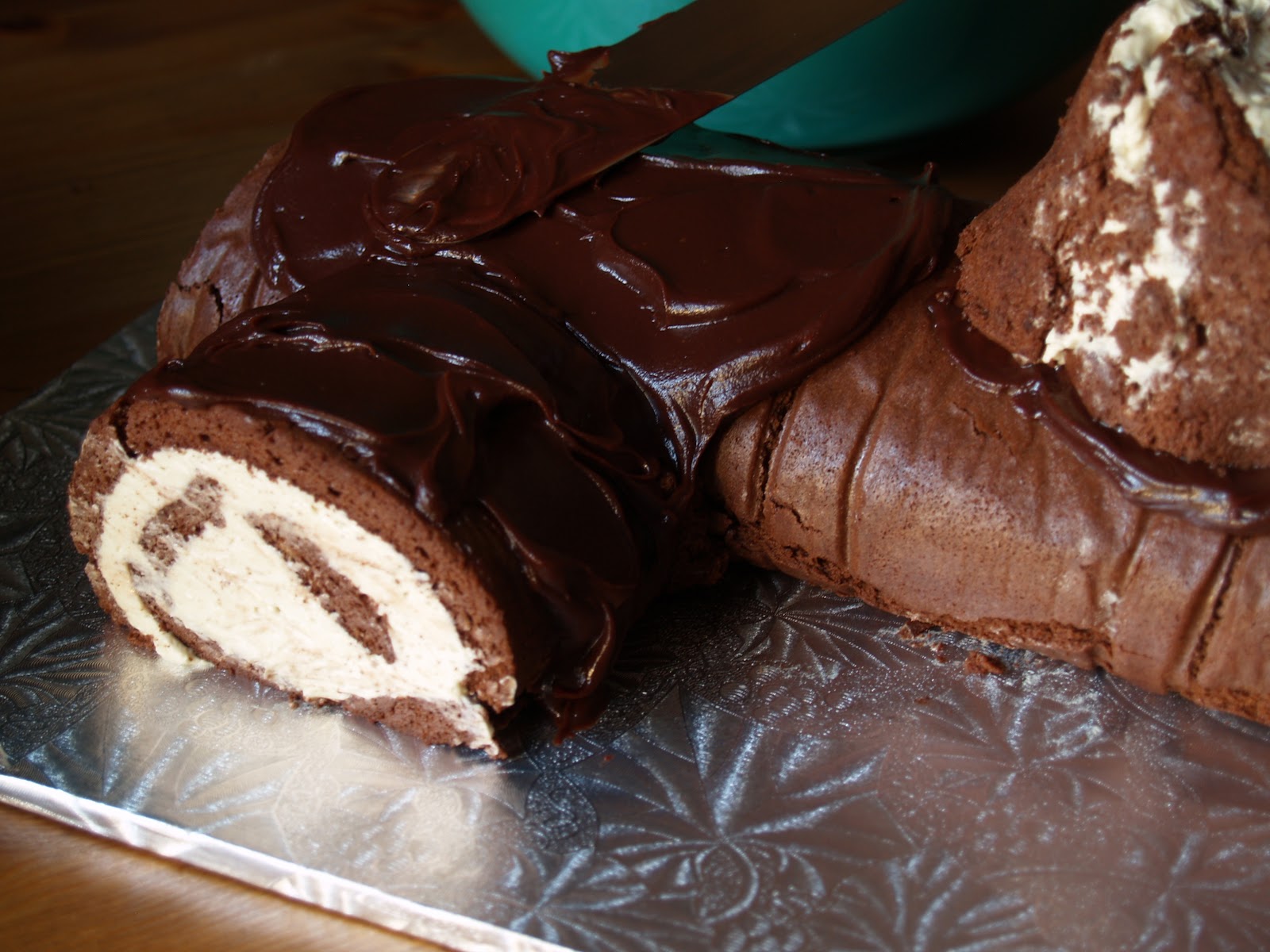
      Assembly: Transfer the cooled roulade with parchment to a clean work surface and brush lightly with rum syrup. Allow syrup to absorb for a few minutes before spreading the mocha buttercream evenly over top using a metal spatula. Grab the long edge of the parchment paper with two hands and gently roll roulade onto itself, pulling off paper as you roll (don't worry if the roulade cracks a little as you roll, as it will be covered by the ganache icing). To make "stumps", diagonally cut a 2" length from each end of buche; then, to make the stumps thinner than the buche, partially unroll each piece, trim off flap, and discard. Set stumps aside.

      Using two long metal spatulas, carefully transfer buche to a serving platter lined with strips of waxed paper. "Glue" stumps onto buche with some of the icing. Using a metal spatula, evenly spread icing on buche, dragging spatula along icing to simulate tree bark. Decorate with mushrooms, then sift confectioners' sugar over mushrooms and buche to resemble snow.

      Notes:
      • Cut waxed paper to cover the exposed ends of the log to keep from drying out. Remove before serving.
      • Save the leftover egg yolks to make ice cream.